Stephanie Lieberman Paley: Conversation with a TKGA Master Hand Knitter
Stephanie Lieberman Paley, CKC’s Secretary and Program Coordinator, completed the The Knitting Guild Association’s Master Hand Knitting Certification Program in 2026. This prestigious and intensive 3-level certification program is only available through The Knitting Guild Association, TKGA. You can find out more about the program on their website.
Are you curious about what is involved in TKGA’s Master Hand Knitting Certification Program? Read the interview of Steph, below, and you may be inspired to do this yourself!
Jennifer Lindsay interviews Stephanie Lieberman Paley, a TKGA Certified Master Hand Knitter and Technical Editor:
What motivated you to want to become a certified Master Hand Knitter through TKGA?
My first experience in TKGA was becoming a Certified Technical Editor. I had torn my ACL and had a lot of time on my hands. Once I completed that certification, I was ready for a new challenge to improve my knitting skills.
You worked through three levels of increasing difficulty that fused a substantial amount of knitting and research. How long did it take you to complete the program?
From start to finish, it was 4 years. I did take a break between each level.
What was the most important thing you learned overall?
“Challenge your assumptions” is the simple phrase that I heard during a TKGA conference that best describes working through the Master Hand Knitting certification. As an accomplished knitter who had been teaching knitting for over 10 years at the beginning, I was surprised to realize how much I had to learn – learning about different fibers and the history of knitting only enriched this process.
You were required to read a series of books and articles about knitting or craft. How did you decide what to focus on?
Each level had specific requirements on what to write, including blocking techniques, the history of knitting, fiber characteristics, and traditional knitting. The same is true for the book and magazine reviews.
Do you have any recommendations for others who are already undertaking this certification process, or considering it?
Take your time and find an organization system that works for you. The reviewers take a lot of time and care reviewing your submissions. It can be hard to redo some swatches, etc., but the purpose is to learn and improve your knitting.
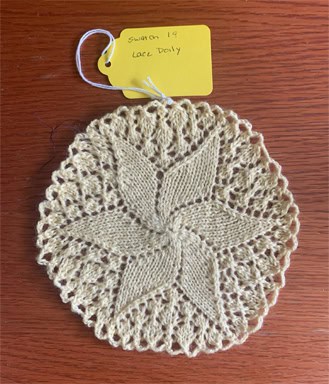
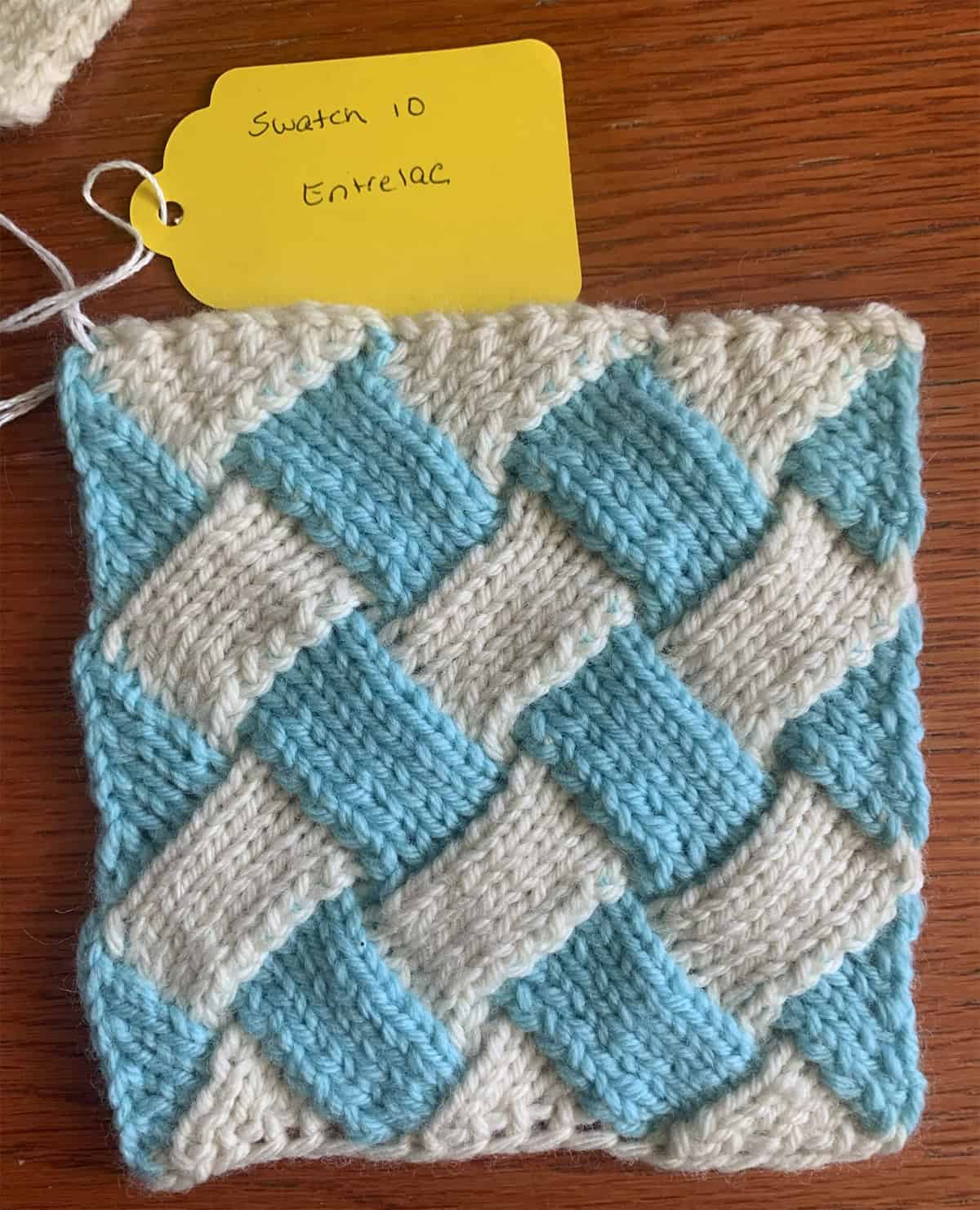
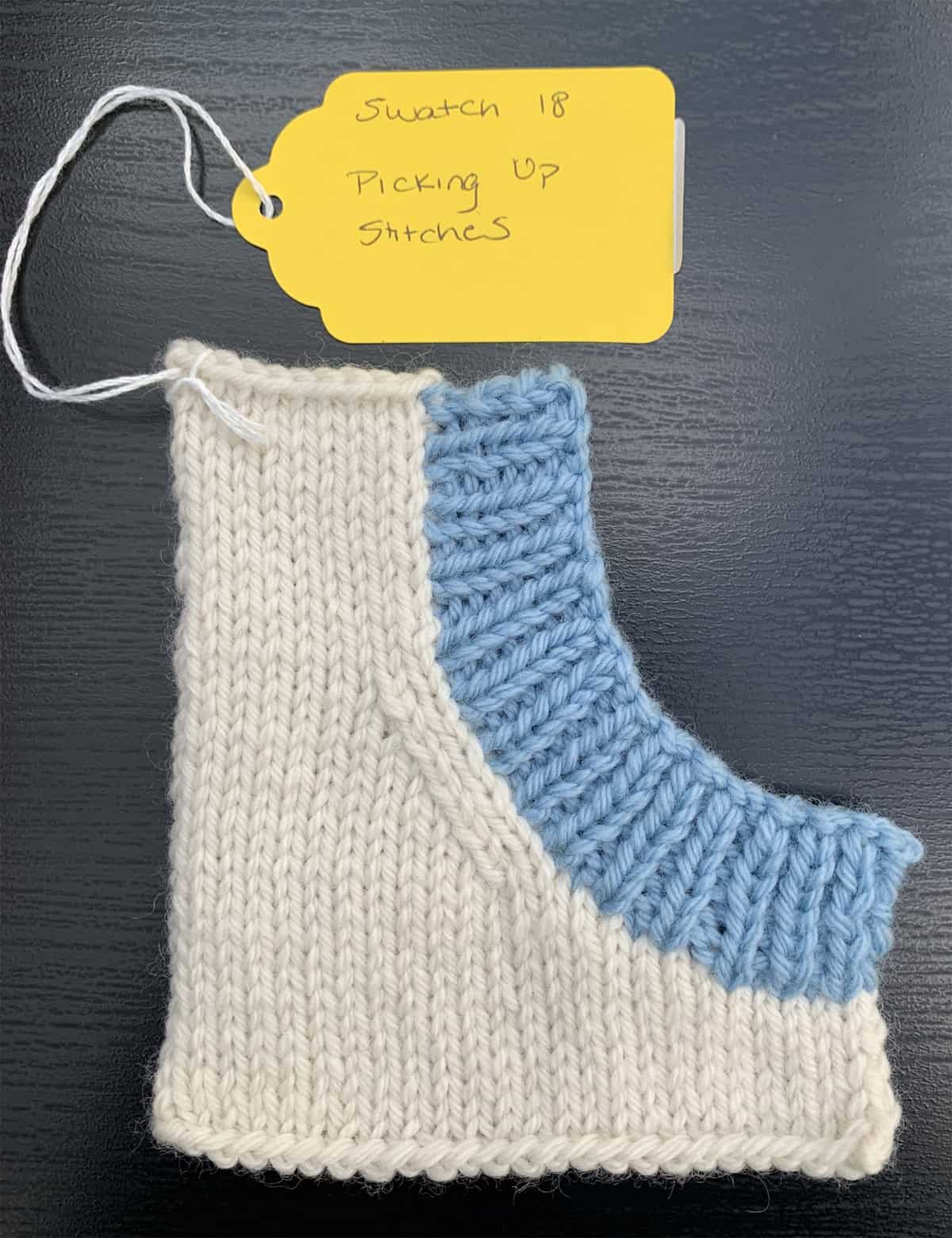
Completing all three levels of the certification program requires making 54 swatches. Many people dislike swatching. Others love it. How do you feel about swatching now?
About the same as I did before! Every swatch in the Master Hand Knitting program is specifically designed to teach a different skill, be it decreasing and increasing, seaming, or different techniques like lace and intarsia. Swatching for a garment isn’t the same.
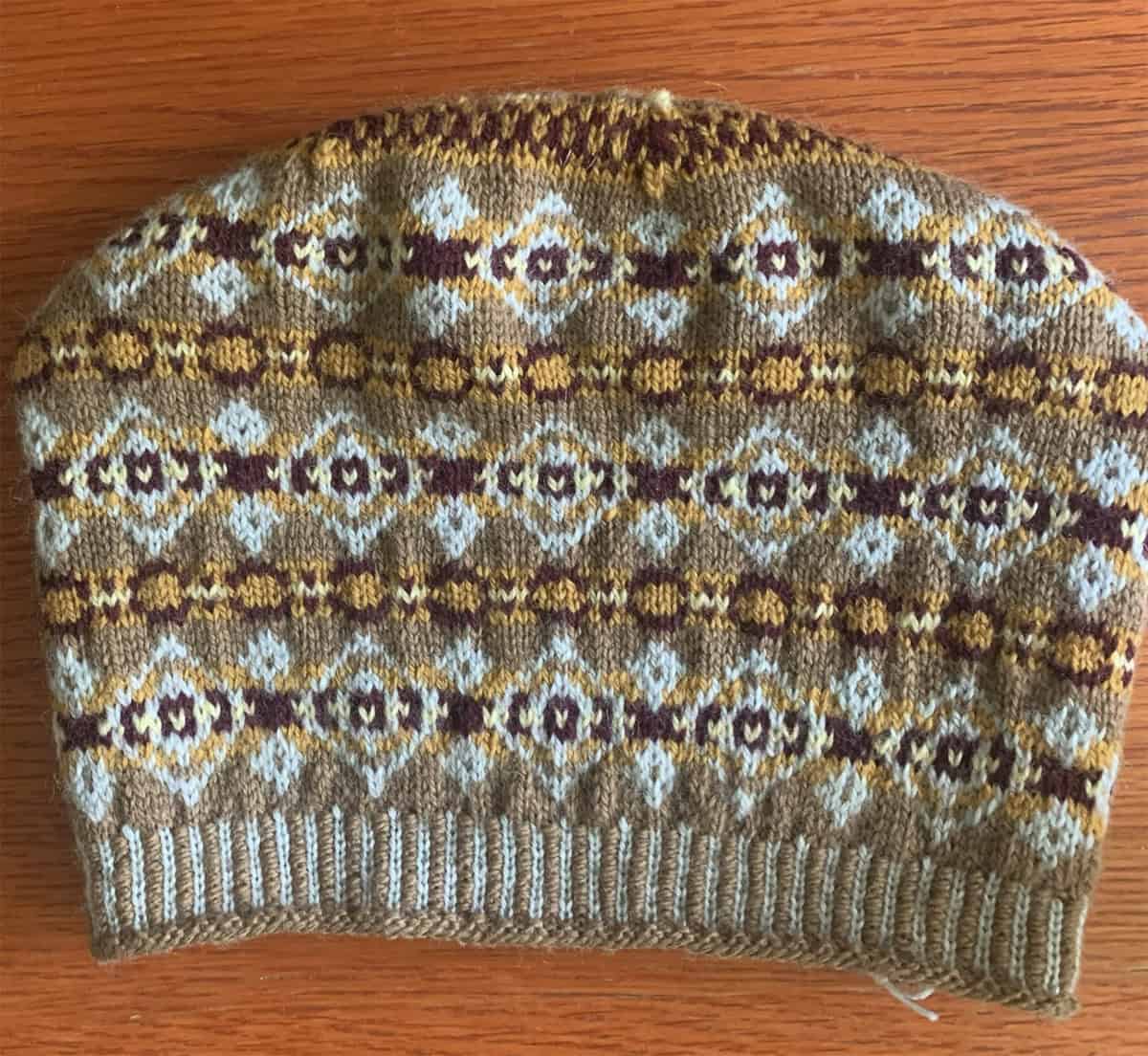
Tell us a little about your inspiration for your final project — the colorwork hat.
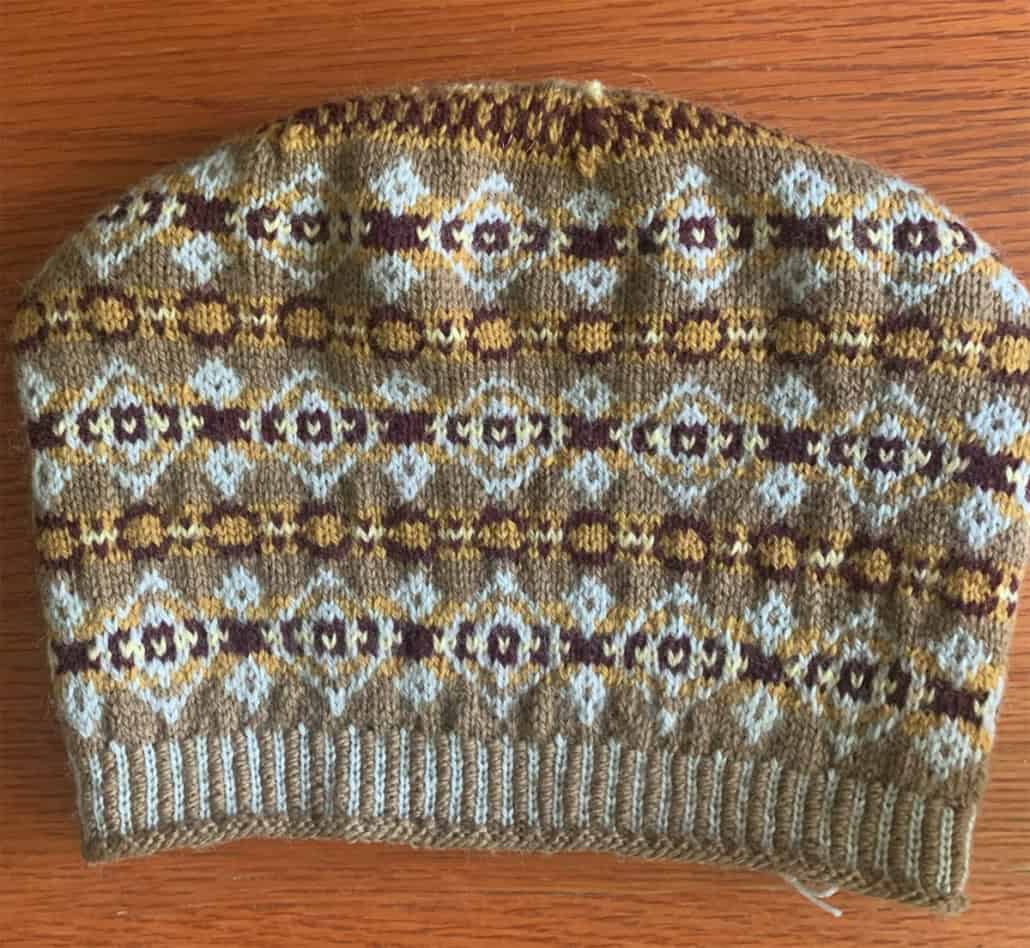
The parameters are well-defined for the final projects. Techniques, number of colors, and traditional style. My approach was to swatch with different designs and different color combinations until I found something that worked with my gauge and hat design.
Tell us a little about your inspiration for your final project — the cabled sweater.
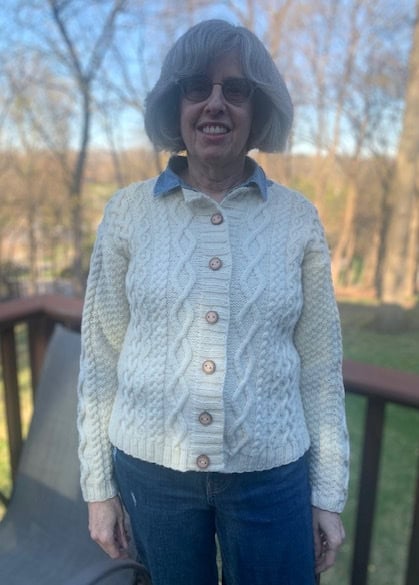
A similar approach was used for the sweater. Once I selected an appropriate yarn, I swatched to determine which cables worked together to make a cohesive design. I named my sweater based on buttons I used – they were made in Iceland.
Will you continue to create your own designs?
Probably not. It is invaluable to understand sweater construction as a knitting teacher. Going through this process makes it possible to guide my clients on how to modify a pattern to make a sweater that fits well.
Closing Thoughts:
By adding her swatches and projects to CKC’s Community Collection, Stephanie has documented her personal journey through this important, and influential educational experience. Stephanie hopes to encourage others who are working on or who have completed the program to do the same. Ultimately, having a fuller representation of the work of TKGA Master Hand Knitters in CKC’s Community Collection will showcase an important body of work by a number of dedicated individuals — including TKGA’s students and their mentors — and will inspire more knitters to consider whether undertaking this program is right for them.
Additional Resources:
You can see Stephanie’s final Level 3 projects, a colorwork hat and cabled sweater, both designed and knitted by her, in TKGA’s 2026 Showcase of Master Hand Knitters. You can also see all the projects currently tagged “TKGA,” including Stephanie’s Level 2 and Level 3 garments and swatches, in CKC’s Community Collection.

Leave a Reply
Want to join the discussion?Feel free to contribute!